


At Futurebytes, we are dedicated to shaping the innovators of tomorrow. With a mission to make learning accessible and engaging, we’re excited to inspire young minds this summer and beyond. See you this summer at Futurebytes—where curiosity meets creativity!
The idea in plain language
STEM Education in the Bay Area: What Makes It Unique is a question many families ask when they are trying to choose a useful, enjoyable enrichment experience. Parents do not need to become experts to make a thoughtful choice. The goal is to find an age-appropriate experience that builds confidence, gives children meaningful practice, and leaves room for curiosity. In STEM learning, the strongest outcome is not simply finishing a project. It is helping a child become more willing to ask questions, try a strategy, notice what happened, and make a thoughtful next attempt. That approach makes room for different starting points. One child may enjoy building immediately; another may prefer to watch, ask questions, or begin with a smaller task. Good instruction treats those differences as information about how to support learning, not as reasons to label a child as talented or not talented.
What children can practice
Children can practice several connected skills through STEM learning. They learn to break a larger goal into smaller steps, recognize patterns, communicate a plan, and respond when the first attempt does not work. They also practice persistence in a concrete way: changing one part of a design, running another test, and comparing the result with the original goal. These habits transfer beyond the activity because they describe a general way of thinking about problems.
What a strong experience looks like
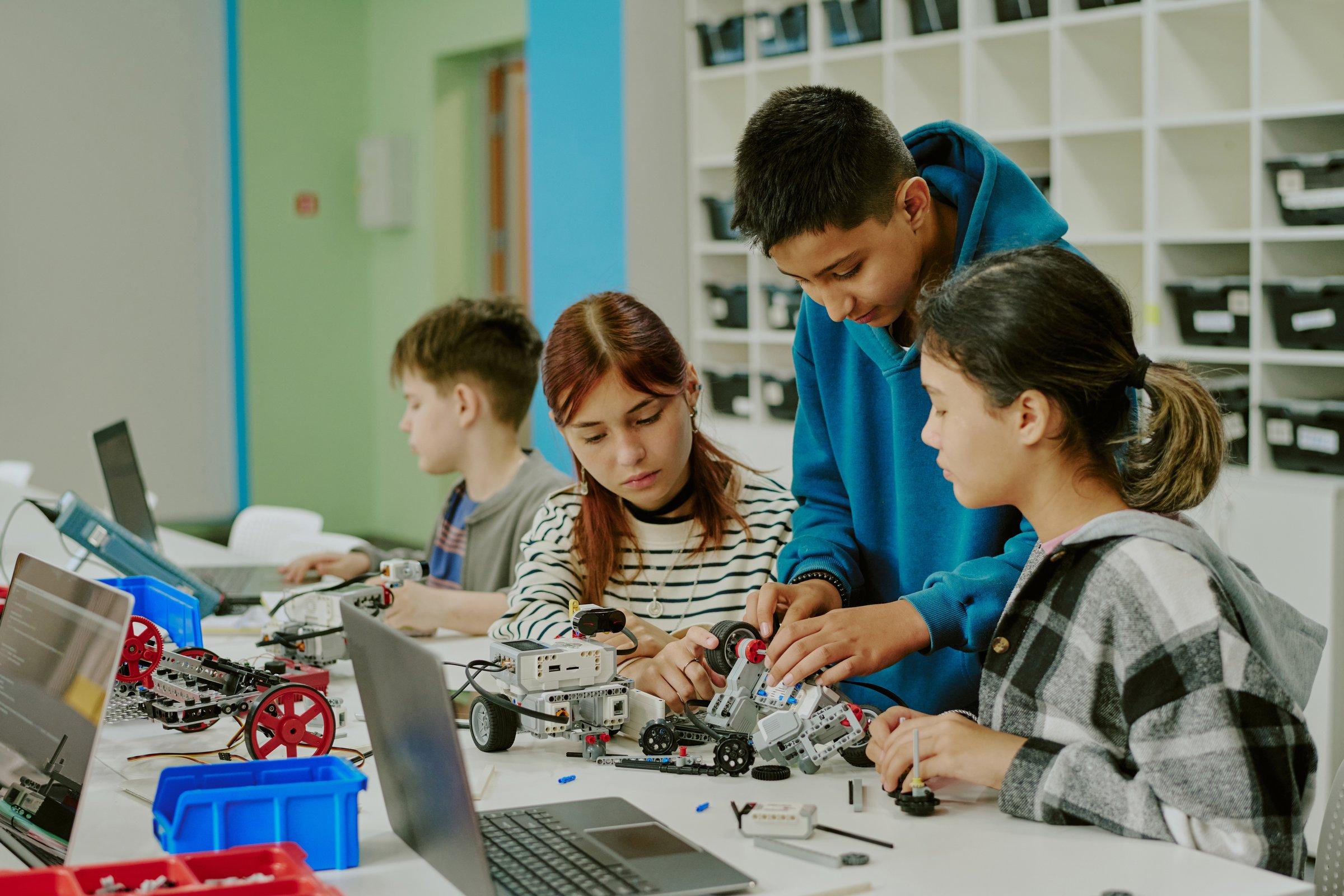
A high-quality class balances structure and choice. Clear instructions help beginners get started, while open-ended questions give them a reason to think for themselves. Instructors should be able to explain what students are learning, not only what they are making. Look for time spent building, coding, testing, discussing, and revising rather than a lesson that is mostly passive demonstration.
How parents can choose
Begin with practical fit. Consider the child’s age, attention span, schedule, transportation, and current interests. Then ask what happens when a student is finished early or gets stuck. A good answer might include extensions, peer collaboration, instructor coaching, or a chance to redesign. Ask how progress is shared with families and whether the program welcomes beginners without making them feel behind.
A low-pressure next step
A trial class or short introductory project can provide useful evidence. Notice whether the child gets a chance to make a decision, whether mistakes are treated calmly, and whether the instructor asks the child to explain their thinking. Afterward, ask what the child would change next time. That answer can reveal more about engagement than whether the project worked perfectly.
A quick comparison for families
STEM Education in the Bay Area: What Makes It Unique does nothave to be an all-or-nothing decision. Start with the option that fits yourfamily and your child’s current interests, then judge the experience by thequality of thinking it invites. When children have appropriate support and realchances to make decisions, STEM learning can become a practical way to buildconfidence and lasting learning habits.
Sources
[1] California Department of Education, Computer ScienceEducation, https://www.cde.ca.gov/ci/cr/cf/
.png)